Benefits Of Caregiver Support Groups
You give your loved one a lot of care and support, but who supports you when you feel tired, lonely, or frustrated? Joining a caregiver support group can help you feel supported so that you can continue to provide great care.
Here, you’ll learn:
- What are caregiver support groups?
- What are the benefits of caregiver support groups?
- What can you expect?
- How do you get started?
Caregiver support groups offer many benefits for both you and the person you care for. Research shows that these support programs can improve your mental health and help delay moving your loved one to a nursing home. These groups focus on the tough issues caregivers face and provide valuable support.
What Are Caregiver Support Groups?
Caregiver support groups help caregivers feel less alone and prepare them to handle their caregiving roles. Caregiver support groups bring together people who are caring for loved ones who may be ill, injured, disabled, aging, or elderly. In these groups, caregivers share their experiences, offer emotional support, and give each other advice. Support groups provide a safe place to talk about challenges, get encouragement, and learn new ways to cope.
What Are The Benefits Of Caregiver Support Groups?
Support group involvement is just one tool to manage the day-to-day stress of caregiving. Some of the many benefits include:
- Emotional support
- Education
- Empowerment
- Social support
Emotional Support
Caregivers can feel emotionally drained and isolated. In support groups, you can talk openly about your feelings and be comfortable sharing frustrations, questions, or accomplishments. Support group members can provide validation, empathy, and encouragement of your experiences. Meaningful connections are made among group members resulting in feeling less isolation or loneliness.
Education
Caregivers can learn about caregiving techniques, support services, and healthcare systems which can help you improve your skills and the quality of care you provide. Some groups may offer training on specific skills helping you improve your effectiveness. Caregiver support groups often provide information about available community resources, such as financial assistance or respite care, which can ease the caregiving burden.
Empowerment
It’s common for caregivers to question their decisions and ability to care for loved ones. By attending support groups, you’ll gain empowerment. This comes from others’ encouragement to take an active role in your own self-care. This then allows you to provide the best care for your care recipient. Learning about the experiences of others will also provide new perspectives and inspire your own caregiving approach.
Social Support
Caregivers can form connections with others who are going through similar experiences. This creates a feeling of emotional support and companionship. Social support is one of the key things caregivers often lose in their roles. As other solutions or approaches are shared by group members with a diverse set of experiences and backgrounds, you may discover different methods to try out.

What Can You Expect?
Caregiver support groups will typically be organized to cater to the needs of the caregivers in the community. The following key points will help you understand what to expect in a group:
Discussion Topics
In caregiver support groups, facilitators usually guide the discussions and provide helpful educational resources. Caregivers get to share their experiences, challenges, and feedback. Common topics in these meetings include information sharing, role-playing, caregiver coaching, problem-solving, skills training, and stress-management techniques. Some sessions might also feature workshops on specific topics or guest speakers.
Virtual vs. In-Person Groups
You have the option to join either virtual or in-person caregiver support groups. Group meetings can be held in a local library, senior center, community center, or online. The timing and frequency of meetings can vary, so it’s important to research and choose the ones that best fit your needs and schedule. Convenience is critical for you because the more consistently you attend, the greater you’ll see the benefits. Online support groups offer the ability to access the meeting from wherever you are. If you prefer more flexibility, online forums allow you to seek information at your own pace. Many of these forums have moderators who post questions and share resources.
Facilitators
Peer-led groups are often facilitated by former caregivers. These meetings tend to focus on the caregiving experience and the emotions involved. Some groups are led by professionally trained facilitators, like social workers or psychologists, who teach specific skills. These could include techniques for overcoming communication barriers or stress reduction activities.
Cost & Access
Most caregiver support groups are free to join. While some may charge a membership fee, many states offer grants to cover these costs. Check with your local aging services department or agency for more information.
Questions To Consider When Choosing A Group
- What is the focus of this group? Does it prioritize emotional and social support, or is it more educational?
- Does this group address your specific caregiving situation, such as caring for a spouse or an elderly family member?
- What are the expectations for participation? Are you required to speak at every meeting, or can you observe? Is attendance mandatory for every session?
- What training does the facilitator have? Is the facilitator a peer caregiver or a professional trained in specific topics?
- What is the demographic of the group? For example, do you prefer a Spanish-speaking group or an LGBTQA+ group?
If one support group doesn’t feel right for you, don’t give up—another might be a better fit. Keep exploring until you find the one that meets your needs!
How Do You Get Started?
To find a caregiver support group, check with your local aging services department or condition-specific association, like the Alzheimer’s Association. There are also nation-wide organizations such as AARP or the National Family Caregiver Support Program. The Eldercare Locator has helpful links for finding services in your area.
Don’t forget to look for support groups that address the condition-specific needs of your loved one. These groups tailor information on specific conditions or illnesses. For example, there are support groups for those caring for family members who are Veterans or have dementia, cancer, or developmental disabilities.
Finding the right caregiver support group will allow you to talk to others who are going through your similar situation and give you connection and support. You will have reduced stress and feel encouraged knowing that you are providing the best care possible for your care recipient.
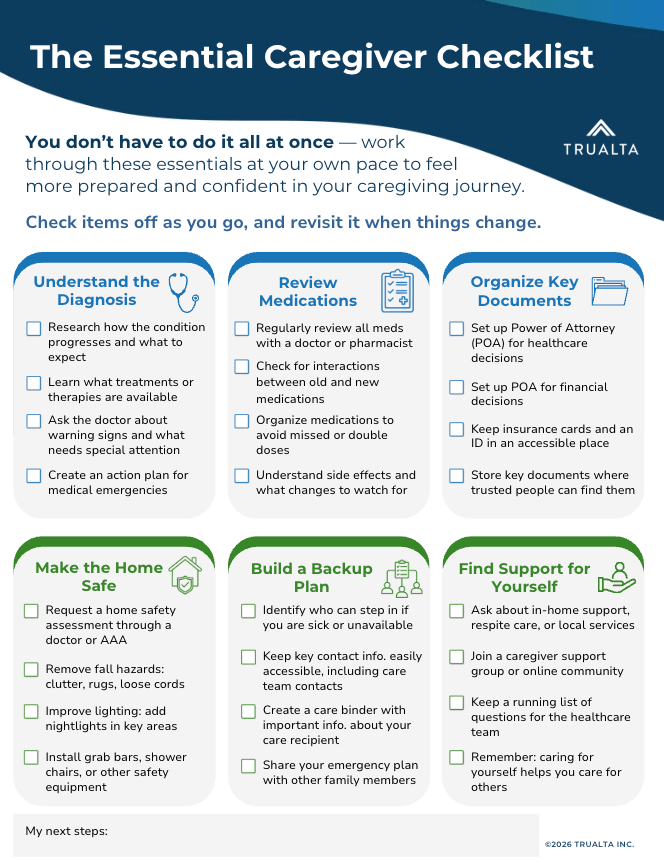
Visit the helpful links above and check if you have free access to Trualta’s caregiver resources.
References:
- https://www.aarp.org/caregiving/life-balance/info-2021/support-groups.html?cmp=KNC-DSO-CAREGIVING-Caregiving-LovedOnes-NonBrand-Phrase-35917-Bing-CaregivingSupportGroup-Phrase-NonBrand&&msclkid=d8c098ea6d651f177418fe25f3b2ec54&utm_source=bing&utm_medium=cpc&utm_campaign=Caregiving-LovedOnes-Nonbrand-Phrase&utm_term=support%20groups%20for%20caregiver&utm_content=Caregiving%20Support%20Group&gclid=d8c098ea6d651f177418fe25f3b2ec54&gclsrc=3p.ds
- https://www.nih.gov/news-events/nih-research-matters/studies-show-benefits-caregiver-support-programs
- https://acl.gov/programs/support-caregivers/national-family-caregiver-support-program